
Table of Contents
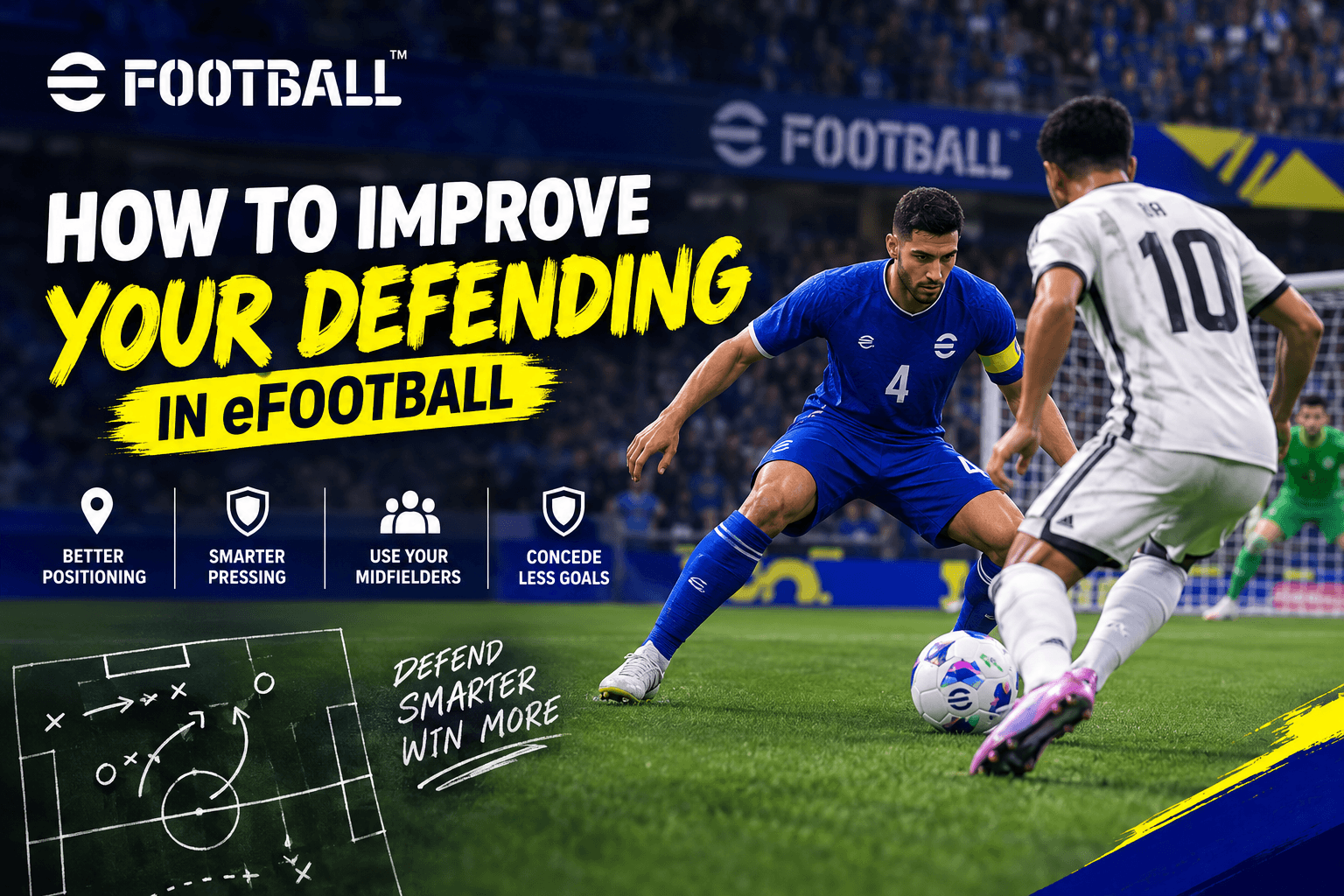
Learning how to improve your defending in eFootball can completely change the way you play. You can have great attackers and control plenty of possession, but if you keep giving away easy chances, one mistake can ruin the whole match.

The good thing is that defending is not only about having the best center backs. Your positioning, timing, pressing and decision-making can make a huge difference, especially when you face players who know how to punish defensive mistakes.
ALSO READ: Why You Keep Losing in eFootball and How to Fix It
Stop Chasing the Ball
One of the first things to change is how you react when your opponent has the ball.
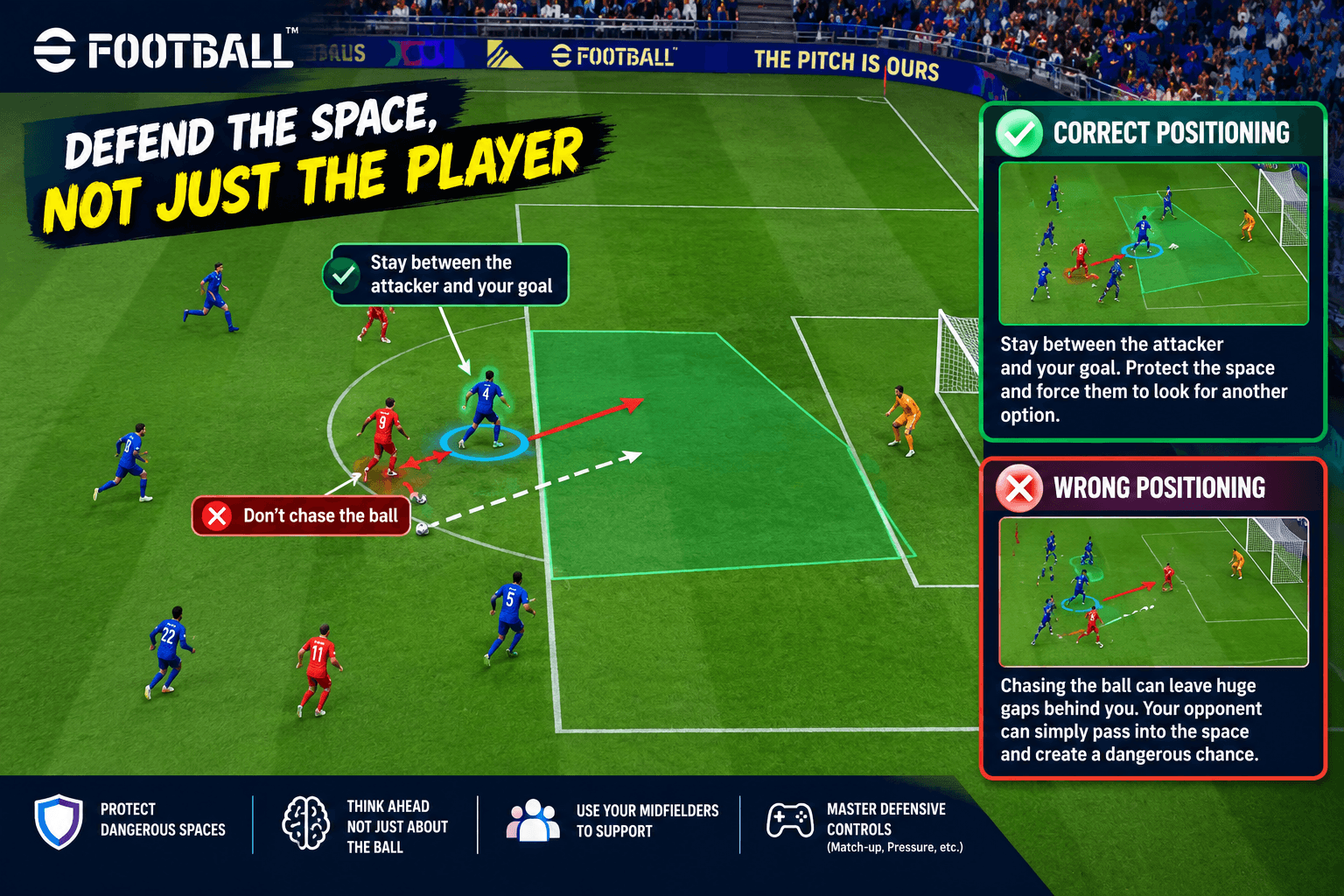
It is tempting to immediately move your defender towards the ball, but doing this too often can create huge gaps behind you. Your opponent may not beat you with a skill move, but they might simply pass into the space you just left.
Instead, try to stay between the attacker and your goal. Make your opponent look for another option instead of giving them an easy path forward.
ALSO READ: How to Choose the Best eFootball Formations for Dominant Wins
Defend the Space, Not Just the Player
Good defending is not always about getting the ball back immediately.
Sometimes your most important job is to protect the dangerous space. If an attacker is moving towards the box, think about where they are likely to pass next and position your defender accordingly.
This becomes especially important when defending through balls. If you are already covering the space behind your defense, you have a much better chance of dealing with the run.
This is where the Match-up command can be useful. KONAMI’s official controls guide explains that Match-up helps your defender face the opponent and position themselves when defending a dribbler.
You can check the full controls on the official eFootball Controls Manual if you want to get more familiar with the defensive commands.
ALSO READ: How to Dominate Using the Best Managers in eFootball
Don’t Pull Your Centre Backs Out Too Early
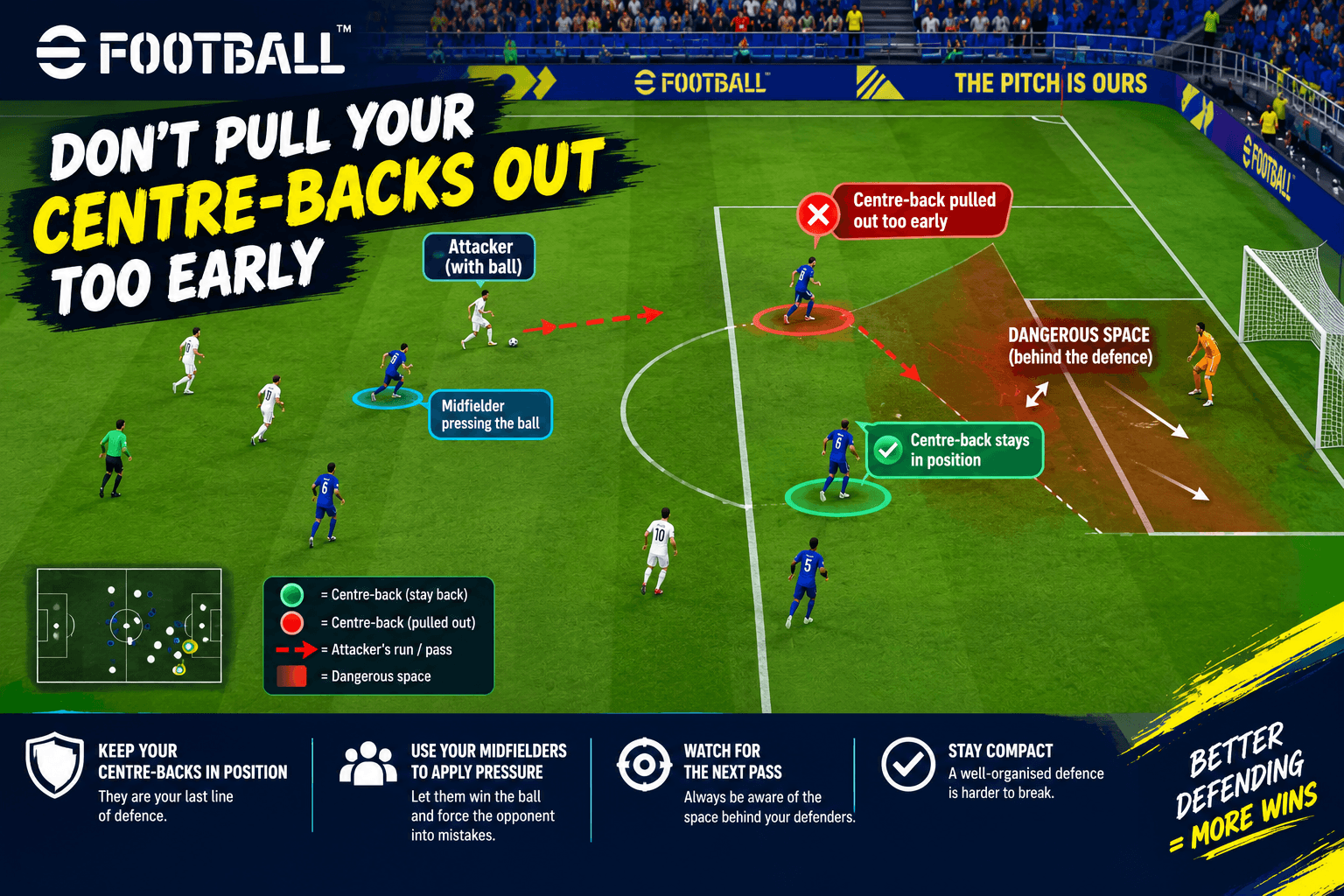
Your centre-backs are your final protection in front of goal, so be careful about dragging them out of position.
If you move a center back too far forward to chase an attacker, your opponent can simply pass into the space behind him. A quick striker can then turn one defensive mistake into a clear chance.
When possible, use your midfielders to apply pressure first. Keep your center backs in a position where they can react to the next pass or attacking run.
Use Your Midfielders to Defend
Your defence should not be doing all the work.
Your midfielders can slow down attacks, block passing lanes and force your opponent to play sideways instead of forward. This gives your defenders more time to get into position.
If your midfield is completely open, your centre-backs will constantly be exposed. Even a simple attacking move can become dangerous when there is too much space between your midfield and defence.
Learn When to Press
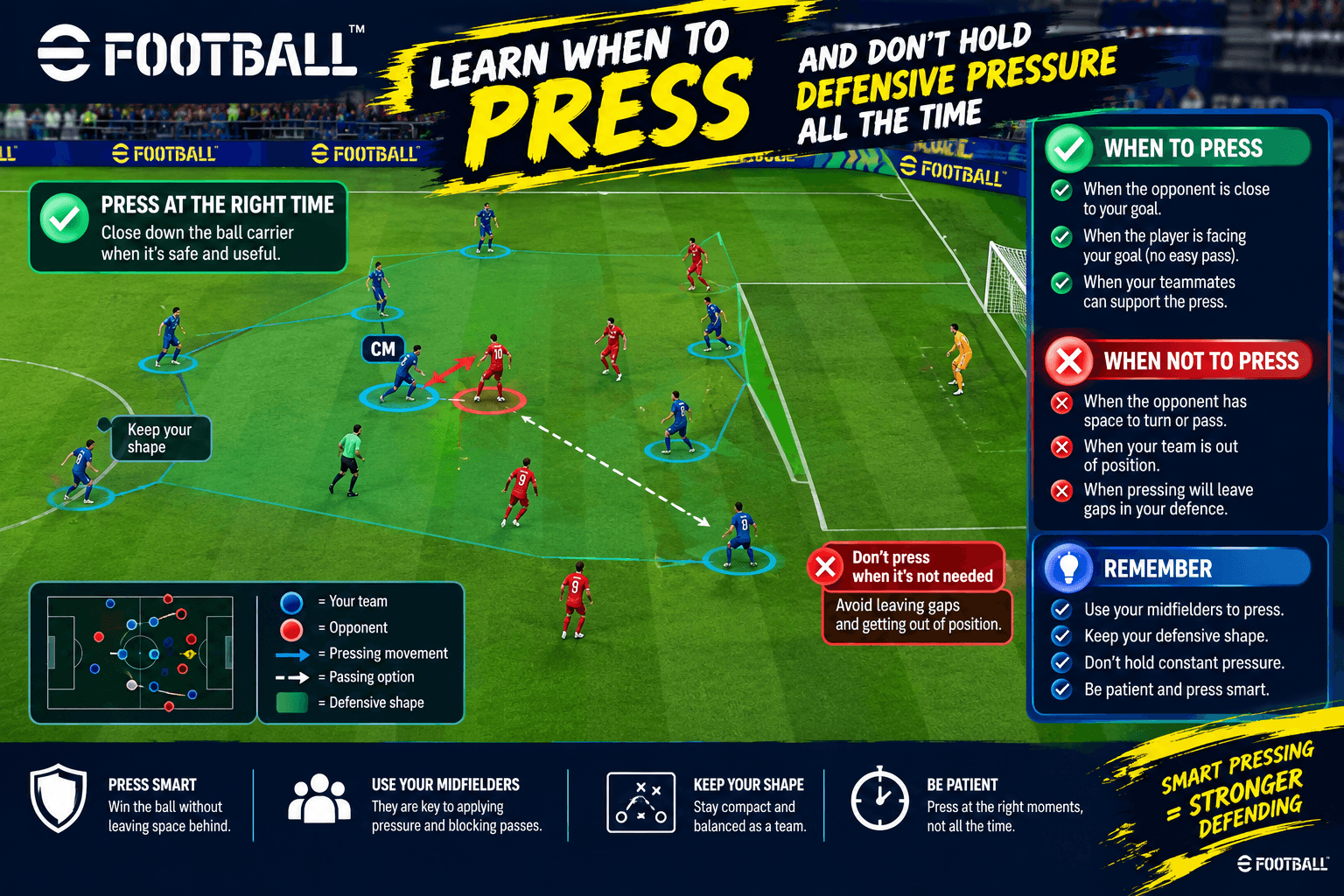
Pressing can win the ball back quickly, but pressing at the wrong moment can also destroy your defensive shape.
If your opponent is facing his own goal or has limited passing options, that can be a good moment to apply pressure. But if the attacker has plenty of space and teammates making runs, rushing forward can leave you exposed.
Don’t think of pressing as something you have to do every second. Sometimes waiting for the right moment is the better defensive decision.
Don’t Hold Defensive Pressure All the Time
Constant pressure can feel safe because your player is always moving toward the ball.
The problem is that your defensive line can start moving around with him. Once your players leave their positions, your opponent can find gaps that were not there a few seconds earlier.
Use pressure when you need it, then recover your shape. Good defending often means knowing when to stop chasing.
Watch Out for Through Balls
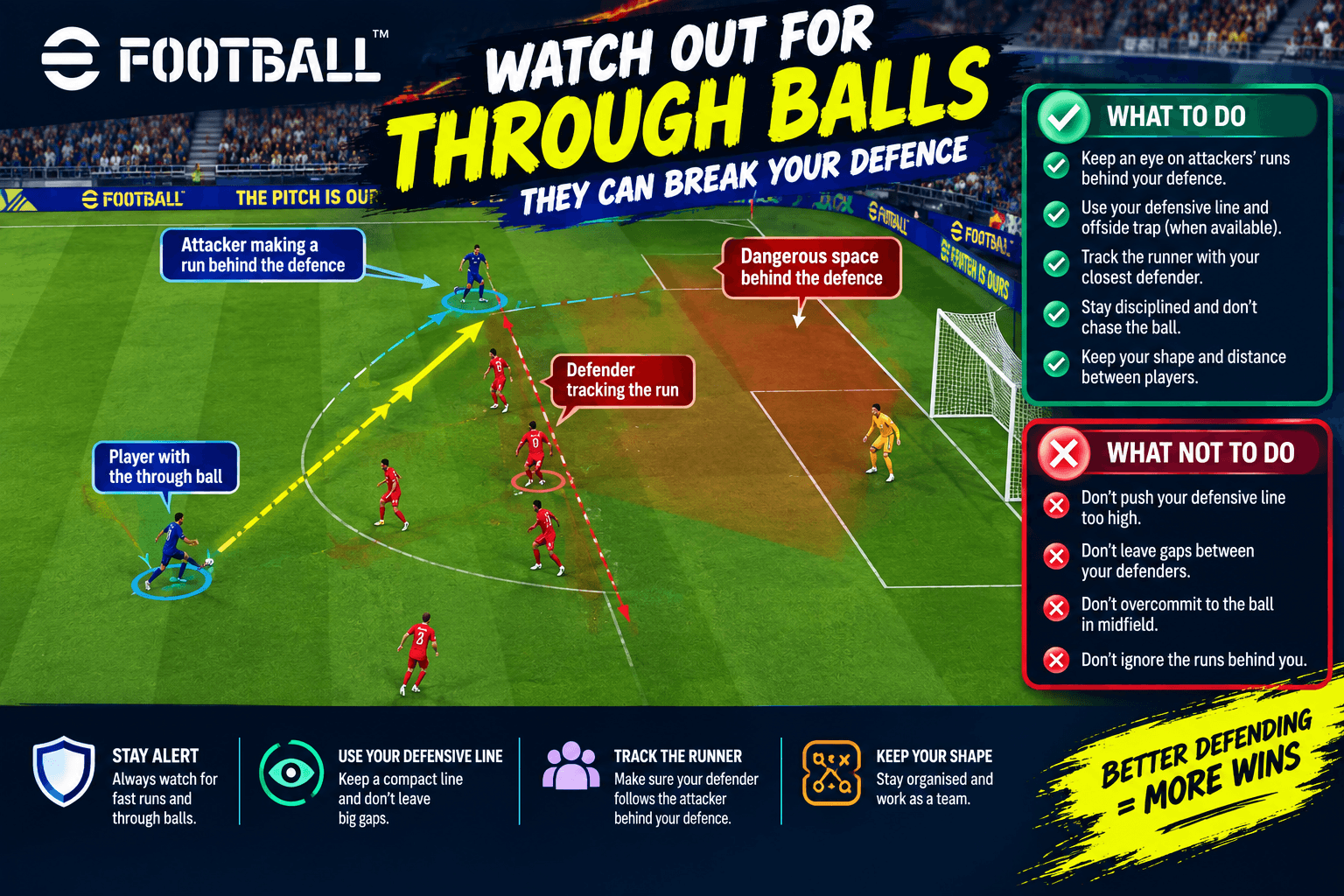
Through balls become dangerous when your defensive line is too high or your defenders are badly positioned.
Watch the movement of the opponent’s forwards instead of only watching the player with the ball. If you notice a striker preparing to run behind your defence, start thinking about the space he wants to attack.
You don’t always need to win the ball before the pass is played. Sometimes simply covering the passing lane is enough to force your opponent into a less dangerous option.
Be Careful Against Fast Attackers
Fast attackers can punish even a small defensive mistake.
If you know your opponent has a quick forward, avoid giving him huge spaces to run into. Pulling a centre-back forward at the wrong time can leave you with very little protection behind him.
Try to stay aware of the space behind your defence. Make the attacker beat you with a difficult move rather than giving him a simple run toward goal.
Learn From the Goals You Concede
Every goal you concede can teach you something.
Maybe you pulled your defender out too early. Maybe your midfield was too far forward, or perhaps you pressed when you should have stayed back.
After a difficult match, don’t only look at the scoreline. Think about how the opponent created the chances and whether you made the same mistake more than once.
Keep Your Defensive Shape
A strong defensive shape gives you more time to react.
You want your midfield and defence to work together instead of leaving huge spaces between the lines. When your players are close enough to support each other, your opponent has fewer easy passing options.
You also don’t need to win the ball immediately. If you can force your opponent to pass sideways or backwards, you have already slowed the attack down.
Don’t Panic After Conceding
This is where many players lose control of the match.
You concede one goal and suddenly start forcing passes, pushing everyone forward and trying to score immediately. Before you know it, you have conceded another goal on the counter.
Stay with your game plan. Being 1–0 down does not mean you have to abandon everything that was working before the goal.
Why It Matters: Good Defending Wins You Matches
You can dominate possession and create plenty of chances, but none of that matters if you keep giving your opponent easy goals.
Improving your defending makes your whole team more reliable. You can attack with more confidence because you know that one lost ball does not automatically turn into a dangerous counter-attack.
That is why learning how to improve your defending in eFootball is about more than making tackles. It is about positioning, patience and making better decisions when your opponent has the ball.
Practice One Defensive Skill at a Time
Don’t try to fix every defensive problem in one match.
Start with one simple goal, such as keeping your centre-backs in position. Once that becomes natural, work on pressing, covering passing lanes and using your midfielders more effectively.
Small improvements can make a big difference over several matches.
Final Thoughts
If you keep conceding goals in eFootball, don’t immediately assume you need new players or a completely different formation.
Look at your defensive habits first. Stop chasing the ball unnecessarily, protect dangerous spaces, keep your centre-backs in position and learn when to press.
Once these decisions become natural, defending starts to feel much easier. And when you stop giving away cheap goals, you give yourself a much better chance of winning the close matches.
FAQs
How can I improve my defending in eFootball?
Focus on positioning before tackling. Keep your defenders in shape, protect dangerous spaces and use your midfielders to slow down attacks.
Why do I concede so many goals in eFootball?
You may be pulling defenders out of position, pressing too aggressively or leaving large gaps between your midfield and defence. Look at how your opponent creates chances and identify the mistakes you repeat.
How do I defend against through balls in eFootball?
Pay attention to attacking runs and protect the space behind your defenders. Try to cover the passing lane instead of waiting until the through ball has already been played.
How do I stop fast attackers in eFootball?
Avoid giving them large spaces to run into. Keep your defensive shape and be careful about pulling centre-backs out of position.