

Table of Contents
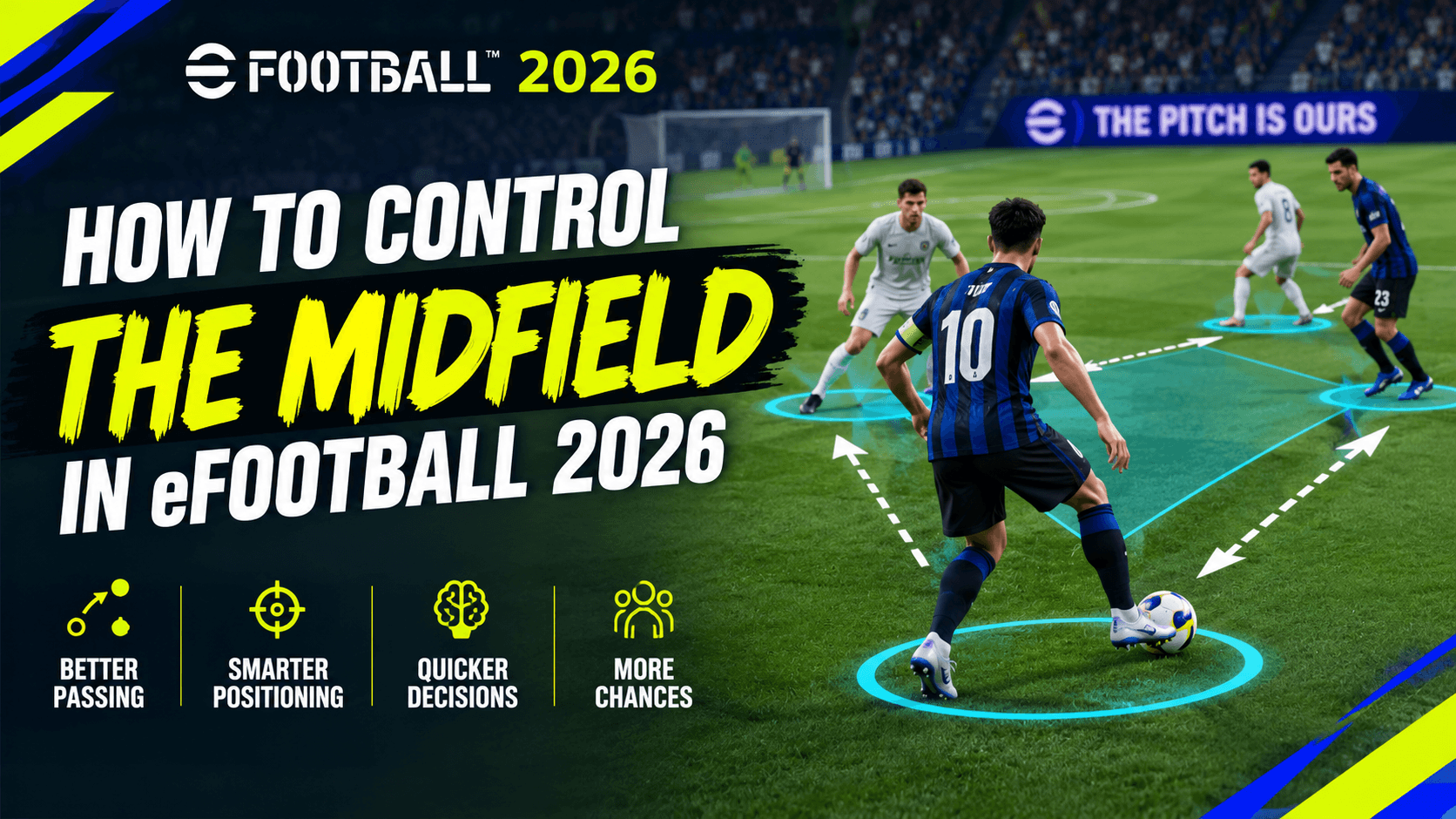
Learning how to control the midfield in eFootball can completely change the way you play.

You can have fast attackers, dangerous wingers and a strong striker, but if you cannot keep the ball or create space through midfield, your attacks will often feel rushed. One minute you have possession, and the next your opponent has won the ball and is running straight at your defence.
The midfield is where you decide the rhythm of the match. If you learn how to receive the ball, move it quickly, create passing options and know when to slow things down, you can make your whole team feel more comfortable.
Why Midfield Control Matters in eFootball
A good midfield is not simply about having the highest-rated players.
It is about having players available for the next pass and making decisions before the opponent closes you down. When your midfielders stay connected, you have more options when attacking and a better chance of keeping possession when the pressure comes.
This is especially important if you like possession football. Instead of forcing the ball forward every time you receive it, you can move your opponent around until a useful opening appears.
ALSO READ: How to Choose the Best eFootball Formations for Dominant Wins
Stop Rushing Your Passes
One of the easiest ways to lose control of midfield is trying to play forward too quickly.
You receive the ball and immediately look for your striker. If the passing lane is blocked, you force the pass anyway and give the opponent an easy chance to recover possession.
Instead, look for the simple pass first.
A pass back to your midfielder or across to another available player is not a wasted pass. Sometimes that extra pass is exactly what you need to move the opponent out of position.
KONAMI’s official controls manual lists low passes, through balls, one-two passes and pass-and-run commands as different attacking tools, so learning when to use each one is more useful than trying to force the same pass every time.
ALSO READ: How to Improve Your Defending in eFootball
Create Passing Options Before You Receive the Ball
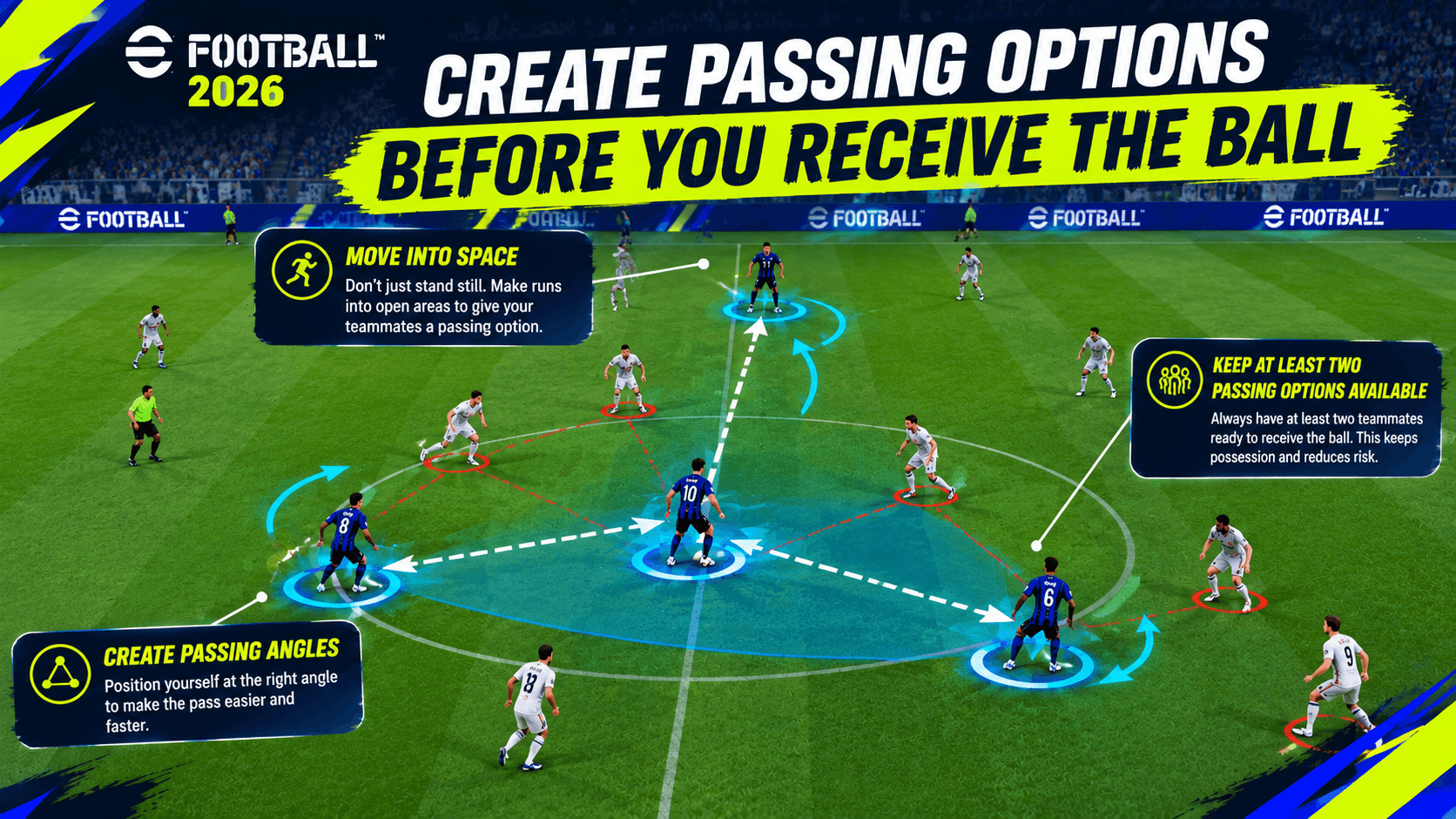
This is one of the biggest differences between simply having possession and actually controlling the midfield.
Before receiving the ball, look around you.
Where is your nearest teammate? Where is the opponent’s midfielder? Is there space behind the opponent, or would it be safer to play backwards?
You want to avoid receiving the ball with nowhere to go.
Try to keep at least two passing options available whenever possible. If one player is being marked, another should be available nearby.
That makes it much harder for your opponent to trap you.
ALSO READ: Why You Keep Losing in eFootball and How to Fix It
Use Your DMF Properly
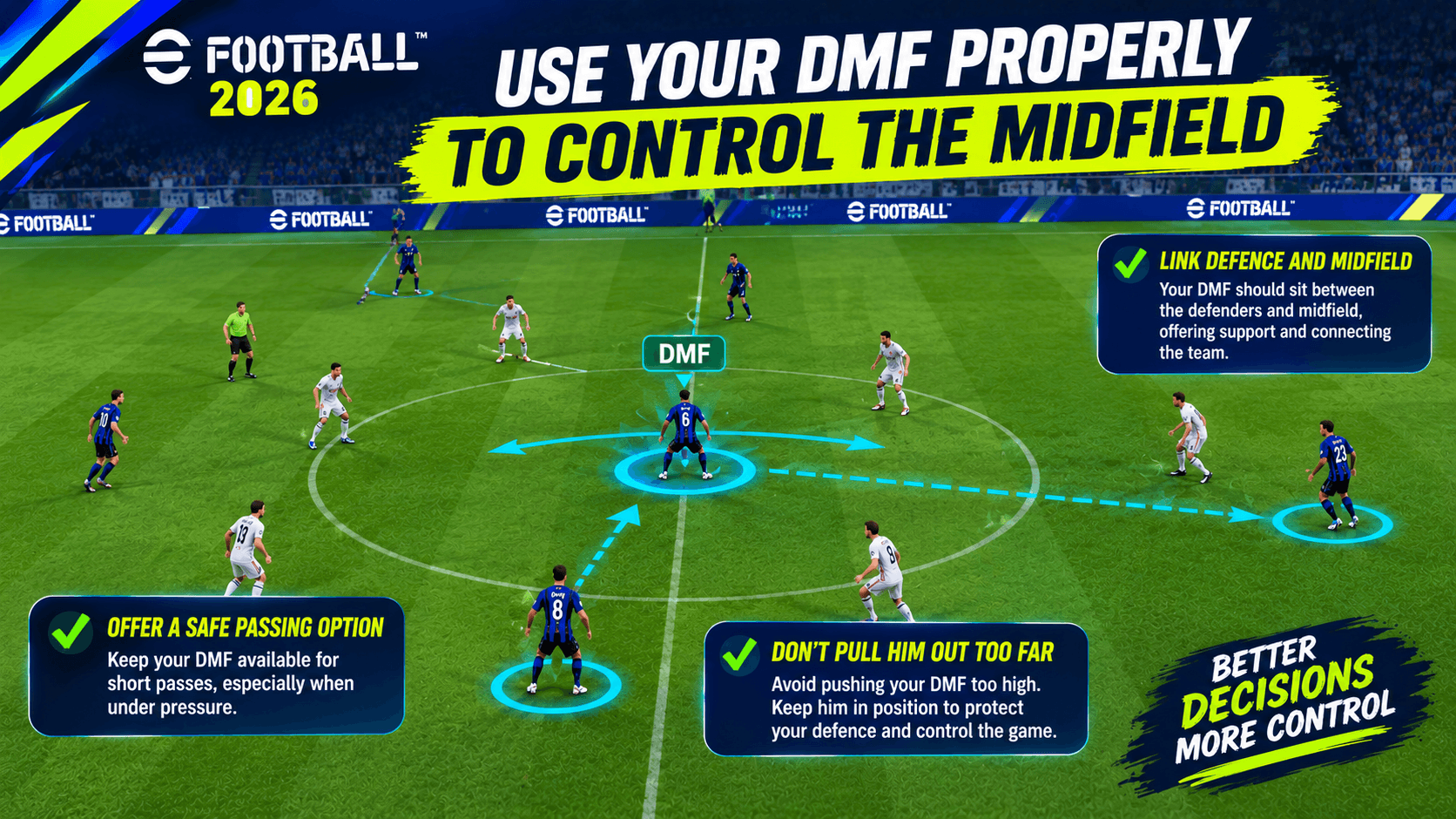
Your defensive midfielder can become one of the most important players on the pitch when you are trying to control midfield.
Don’t always use your DMF to immediately chase the ball.
Sometimes the better decision is to keep him available as a safe passing option. You can use him to recycle possession, switch the direction of your attack and help connect your defence with your midfield.
When you lose the ball, his position can also become important because he may already be in a useful area to slow down the opponent’s attack.
The key is balance.
You don’t want your DMF permanently sitting behind the play, but you also don’t want to drag him forward every time you see an opportunity to attack.
ALSO READ: How to Dominate Using the Best Managers in eFooball
Use 1–2 Passes to Move Through Pressure
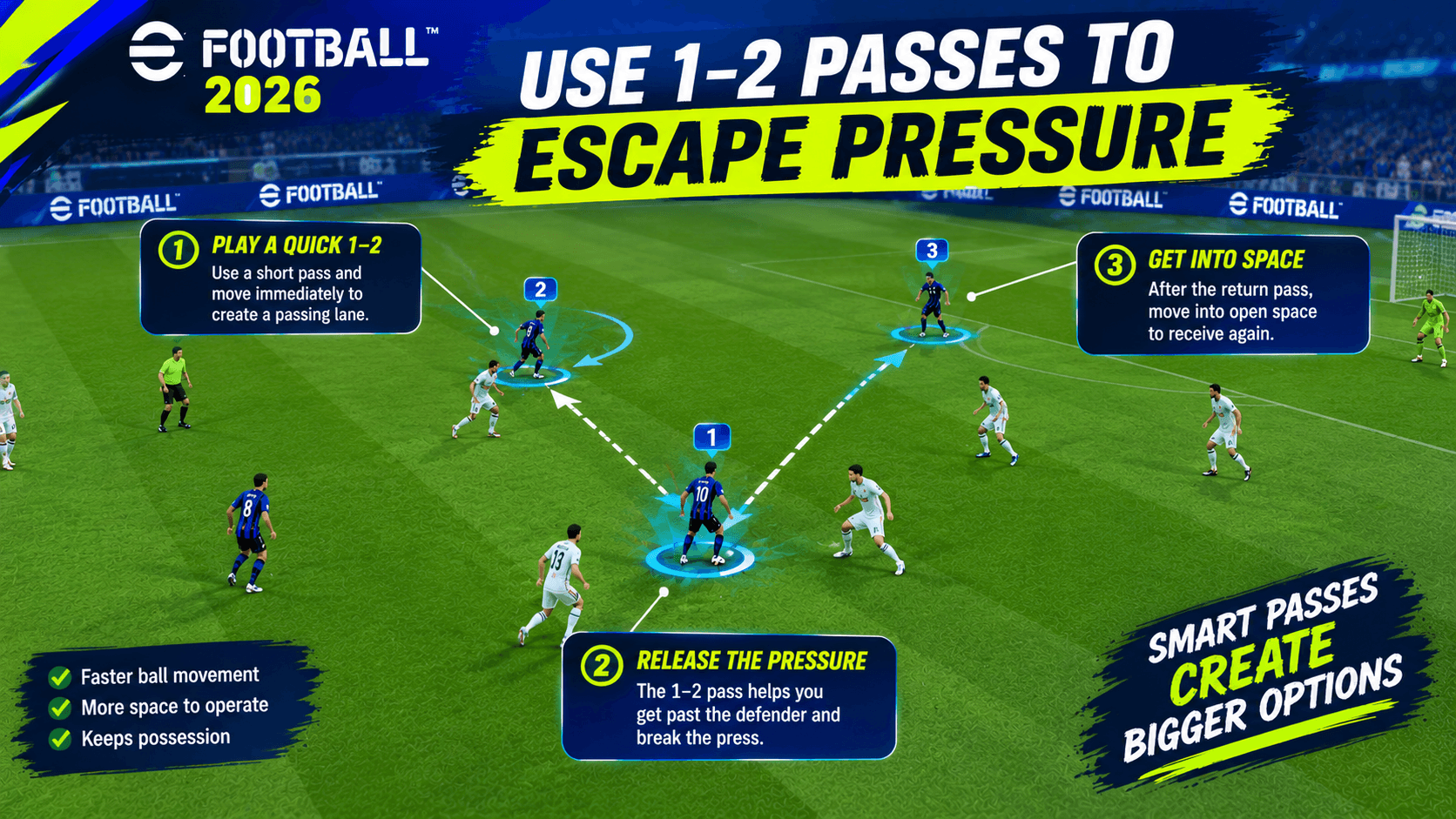
If your opponent likes pressing aggressively, holding the ball for too long can get you into trouble.
This is where the 1–2 pass becomes useful.
You pass to a teammate and immediately make a forward movement, giving the receiving player another option. KONAMI’s official controls manual specifically includes a 1-2 Pass (Forwards) command and a Pass-and-Run command.
You don’t have to use it on every attack.
The idea is to use quick combinations when your opponent is closing you down and there is space to attack behind their midfield.
A simple pass followed by a run can sometimes open a gap that was not there a second earlier.
Don’t Pull Your Midfielders Out of Position
There is a difference between pressing and chasing.
If you constantly drag your midfielders towards the ball, you can create huge spaces through the centre of the pitch.
Your opponent only needs one good pass to exploit that gap.
Instead, think about the space you are protecting. If your teammate is already putting pressure on the ball, you may be better off controlling another midfielder and covering the passing option.
Good midfield defending is not always about winning the ball immediately.
Sometimes it is about making the opponent’s next pass difficult.
Know When to Slow the Game Down
Not every attack needs to end with a shot.
This is something many players struggle with.
You make three quick passes, reach the final third and suddenly feel like you have to force a through ball. The opponent blocks it, wins possession and starts a counterattack.
Sometimes the smarter move is to go backwards.
Reset the attack. Move the ball to another midfielder. Change the side of the pitch and wait for the opponent to move.
Controlling midfield means controlling the rhythm, not constantly playing at maximum speed.
Give Your AMF Space to Create
If you use an attacking midfielder, don’t constantly force the ball into him.
Instead, move the ball around first.
When your opponent’s midfield starts moving towards the ball, gaps can appear between their midfield and defence. That is when your AMF can become much more dangerous.
A quick pass into space followed by a forward run can create a much better attacking situation than simply passing directly into a crowded area.
The goal is to make your attacking midfielder receive the ball with options around him.
What to Do When Your Opponent Presses High
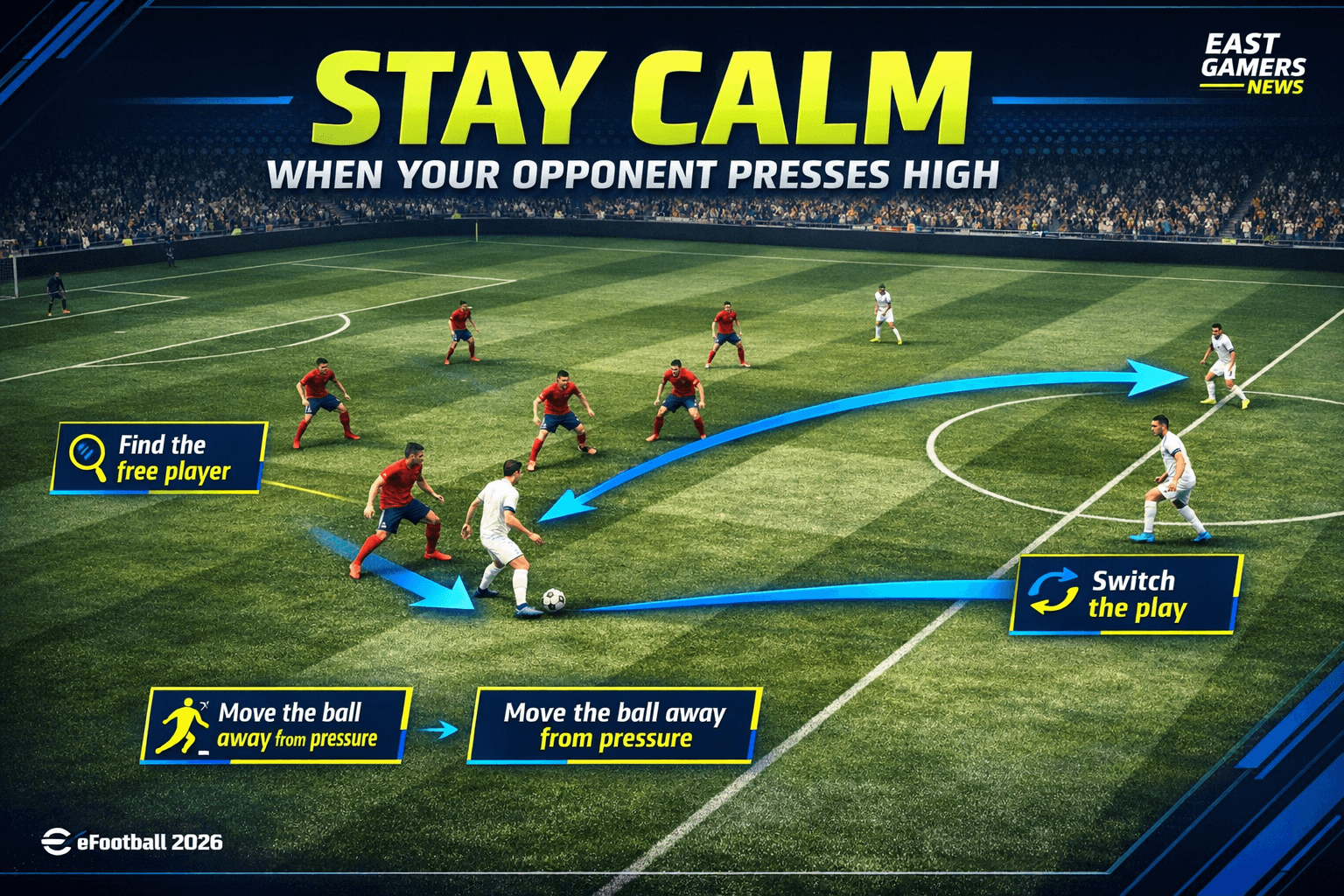
High pressure can make midfield feel impossible if you panic.
The first mistake is trying to beat the press with one spectacular pass.
Instead, look for the free player.
If your opponent sends two players towards the ball, someone else is likely to have more space. Move the ball away from the pressure instead of fighting through it.
You can also use short passes to pull the opponent towards one side before switching the attack.
The important thing is not to treat pressure as something you must immediately escape with a forward pass.
Sometimes you escape it by simply moving the ball sideways.
Learn to Recognise the Extra Pass
This is where your midfield control can really improve.
Imagine your striker is open but your winger has an even better passing lane.
Don’t automatically choose the striker.
Take the extra pass if it gives you a better angle.
The same applies when you are near the box. One more pass can move a defender away from the space you actually want to attack.
Good possession is not about passing for the sake of having a high possession percentage.
It is about using the ball to create better decisions.
Why It Matters: Midfield Control Creates Better Attacks
When you control midfield, attacking becomes easier.
You can decide when to speed up the play, when to keep possession and when to send the ball forward. You also give yourself more opportunities to create one-two combinations and attacking runs.
Most importantly, you reduce the number of moments where you are simply giving the ball away.
That can make a huge difference over the course of a match.
Practice One Midfield Skill at a Time
Don’t try to change everything in one match.
Start with one simple goal.
For one game, focus on making safer passes. In the next, concentrate on creating two passing options before receiving the ball. After that, work on using 1–2 passes when your opponent presses.
Small improvements are easier to notice and easier to repeat.
Over time, these decisions become natural.
Final Thoughts
Learning how to control the midfield in eFootball is not about making every attack complicated.
It is about making better decisions.
Keep your midfield connected, avoid forcing passes, use your DMF intelligently and learn when to slow the game down. When your opponent presses, look for the free player instead of panicking.
Once you start controlling the midfield instead of simply chasing the ball, the whole match can begin to feel different.
And when the midfield is under your control, creating chances becomes much easier.
FAQs
How can I control the midfield in eFootball?
Focus on keeping your players connected and always having passing options available. Avoid forcing forward passes and learn when to recycle possession.
How do I keep possession in eFootball?
Use simple passes, move into space before receiving the ball and avoid holding the ball for too long when an opponent is closing you down.
How do I beat midfield pressure in eFootball?
Move the ball away from pressure instead of forcing your way through it. Short passes, one-two combinations and switching the direction of play can help you find space.
How do I create more chances from midfield in eFootball?
Move the opponent around with passes and look for spaces between their midfield and defence. Use one-two combinations and forward runs when the opportunity appears.